
Astrology and astronomy: two different questions about the same sky
How a calculated position in the sky becomes an interpretation in a horoscope.
Dear Reader,
How can astrology and astronomy look at the same sky and reach different kinds of answers?
Suppose a calendar says Mercury is retrograde. An astronomer can explain the apparent change in direction and calculate when it happens. An astrologer may then suggest that you revisit a plan or check an agreement. The calculation and the advice are two separate steps.
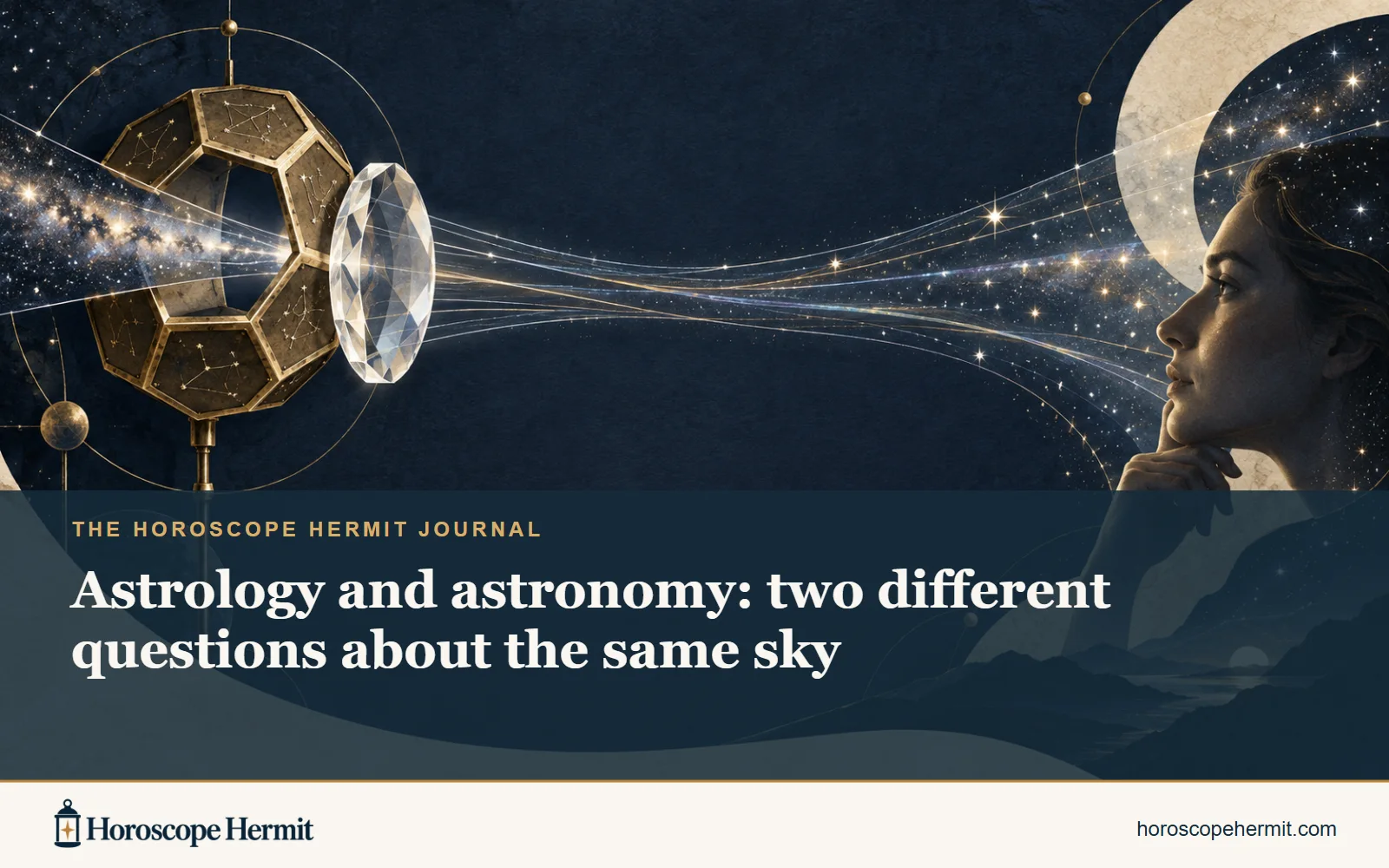
Astronomy studies celestial objects and phenomena through observation, mathematics, and testable physical models. It can calculate an eclipse, measure an orbit, identify the composition of a star, and revise a theory when evidence disagrees.
Astrology begins with some of those calculated positions and assigns symbolic meanings to them. It asks whether celestial cycles correspond with themes in human life. Those meanings are not established by the astronomical calculation itself.
Where confusion begins
An accurate planetary calendar doesn't tell us that a contract will fail. That claim would need evidence of its own. In the same way, calculating a 90-degree angle between two planets doesn't establish that you'll have an argument that day.
Why Horoscope Hermit uses both carefully
At Horoscope Hermit, we use astronomical calculations to work out the positions in a chart. I then explain how I interpret those positions. When I say a conversation may need care, I'm offering an astrological reading. I'm not reporting something a telescope has measured about your relationship.
Curiosity needs boundaries
When you read a claim about astrology, ask what supports it. Can the position be checked? Has the prediction been tested? Is the writer sharing a personal interpretation? Those questions let you explore the subject without treating every claim as equally certain.